
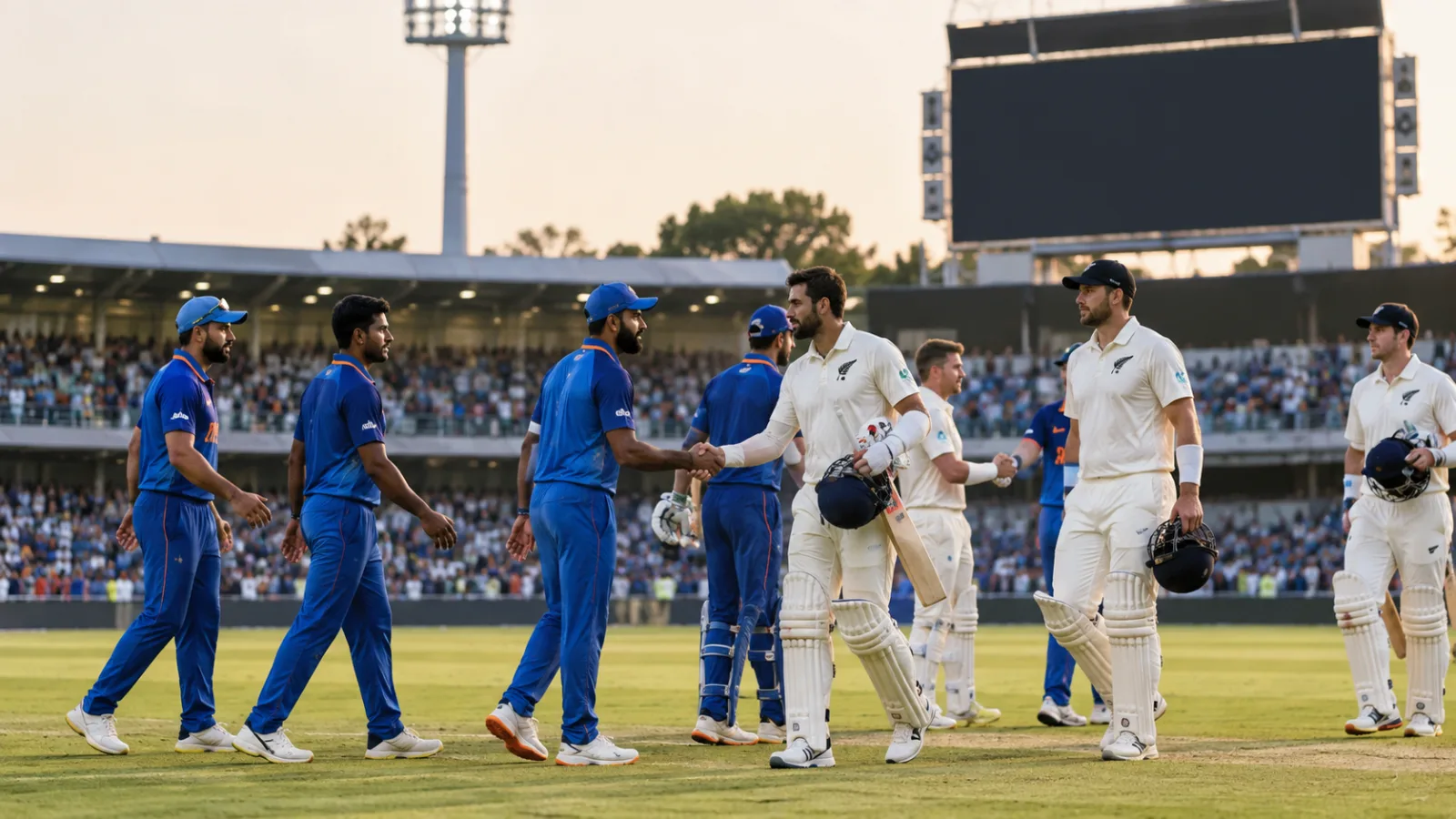
At the simplest level, a cricket result records which side scored more under the conditions of the match. But the way a result is determined depends on the format, innings structure and competition rules. A complete explanation therefore needs to cover runs and wickets, target-based chases, ties, no-results and the special provisions that apply when weather or interruptions affect a match.
Table of Contents- The Basic Result: Runs and Wickets
- How Innings Affect the Result
- What a Tie Means
- No Result and Abandoned Matches
- Targets, Revised Targets and Interrupted Matches
- How the Result Appears on a Scorecard
- Read the Result Statement With the Scorecard
- Why Competition Rules Matter
The Basic Result: Runs and Wickets
In a limited-overs chase, the result is generally determined by whether the chasing team reaches the target within its available innings. A successful chase can be described by the number of wickets remaining, while a defending team can win by the number of runs separating the scores. The exact wording on a scorecard follows the match's official result.
How Innings Affect the Result
Test cricket has a different structure because each side normally has two innings and the match can include a follow-on or a draw. A team can win by an innings when it defeats the opponent without needing a second batting innings, or by a number of runs or wickets in other circumstances. The official playing conditions determine how these results are recorded.
What a Tie Means
A tie is not simply a very close result. In a limited-overs match, a tie occurs when both sides finish with the same score under the relevant conditions. Some competitions then use a tiebreaking procedure to produce a winner, while others may record the match as a tie depending on the competition regulations. The main match result and any subsequent tiebreak should be described separately.
No Result and Abandoned Matches
A no-result outcome can occur when a match cannot produce a result under the applicable playing conditions, often because insufficient play is possible. An abandoned match may be recorded differently depending on the circumstances and competition rules. Weather-affected games should therefore be reported using the official match result rather than an informal description.
Targets, Revised Targets and Interrupted Matches
Limited-overs competitions can include provisions for interruptions that change the number of overs available or establish a revised target. The method depends on the format and current playing conditions. A result article should not apply a familiar calculation from one tournament to another without checking the relevant regulations.
How the Result Appears on a Scorecard
A scorecard normally presents the innings totals, wickets and result statement. The result may also show a margin, such as runs or wickets, or state that the match was tied, drawn or ended without a result. For editorial accuracy, copy the official result wording and then explain it in plain language rather than creating a new interpretation.
Read the Result Statement With the Scorecard
The result statement is the final editorial shorthand for a match, while the scorecard provides the evidence behind it. Check the innings totals, wickets, number of overs and any revised target or interruption information before explaining the margin. This is especially important in unusual matches where the ordinary relationship between runs and result is affected by playing conditions.
Why Competition Rules Matter
Two matches with similar scores can be recorded differently if they belong to different formats or competitions with different procedures. Tiebreaks, reduced-overs matches, reserve days and qualification consequences are controlled by the applicable regulations. For a current result story, the official scorecard and competition result should therefore take precedence over a generic explanation.
Frequently Asked Questions
What does a win by wickets mean?
It generally describes a successful chase in which the winning side reaches the target before losing all of its available wickets.
What is the difference between a tie and a no-result?
A tie means the relevant scores are equal under the competition's result conditions. A no-result means the match did not produce a result under the applicable playing conditions.
Can rain change how a cricket result is calculated?
Yes. Weather or interruptions can trigger format-specific provisions for overs, targets or minimum play. The official competition rules should be checked for the exact match.